Project E-TITAN
// NEURAL_DYNAMIC_HARDWARE_TELEMETRY
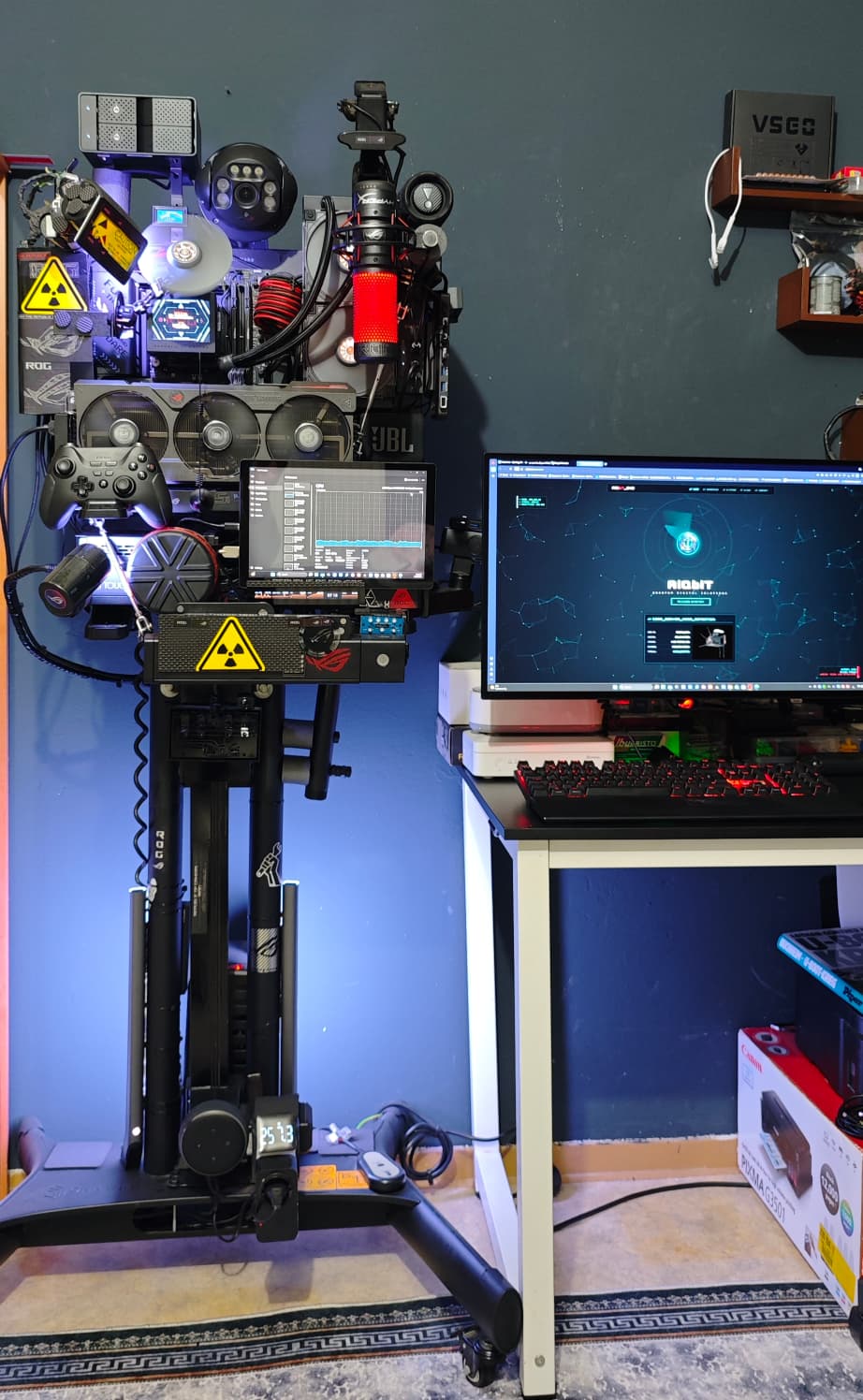
E-TITAN is a one-of-a-kind robotic PC platform, fully controlled by AI. It moves autonomously between standing, upgrade and maintenance modes, and carries a self-integrated JBL sound system built into its frame. Tasked with everything from document processing to managing advanced security devices, it runs entirely under artificial intelligence — an all-in-one machine for heavy work and immersive entertainment alike.
Real footage of E-TITAN switching modes · original AiQbiT soundtrack
A fan that comes to the heat
E-TITAN now has a robotic arm that carries a cooling fan. When a game or a heavy workload starts, the arm swings over the CPU block and the fan spins up. When the system calms down, the fan stops and the arm returns to its parking position: silent when idle, full airflow when it matters.
The arm is driven by an ESP32 and two MG90S servos, and controlled over Wi-Fi by Qbit Core, AiQbiT's own hardware control software, which already knows whether the PC is gaming, under heavy load or idle.
- 01STANDBYArm parked, fan off. The CPU block stays free and the PC stays quiet.
- 02GAME MODE · ARM DEPLOYEDQbit Core detects a game or heavy load, or a CPU temperature above the limit, and sends the arm over the CPU.
- 03COOLING ACTIVEOnce the arm has settled, the fan ramps up through 25 kHz PWM, directly over the CPU block.
- 04CALM MODE · ARM RETURNSThe fan ramps down first; three seconds later the arm swings back to its parking position.
| Component | Model / Specification |
|---|---|
| Controller | ESP32 DevKit on an expansion board, Wi-Fi + over-the-air updates |
| Motion | 2× MG90S metal-gear servos (pan + tilt) with smooth acceleration and braking |
| Fan control | 4-pin PWM fan at 25 kHz, driven directly by the ESP32 |
| Software | Qbit Core (Windows): automatic by mode, adjustable temperature limits, test buttons |
| Smart details | Auto settle at the work position (no servo buzz), short delay against brief load spikes, parks when Qbit Core closes |
| Design & modding | AiQbiT |
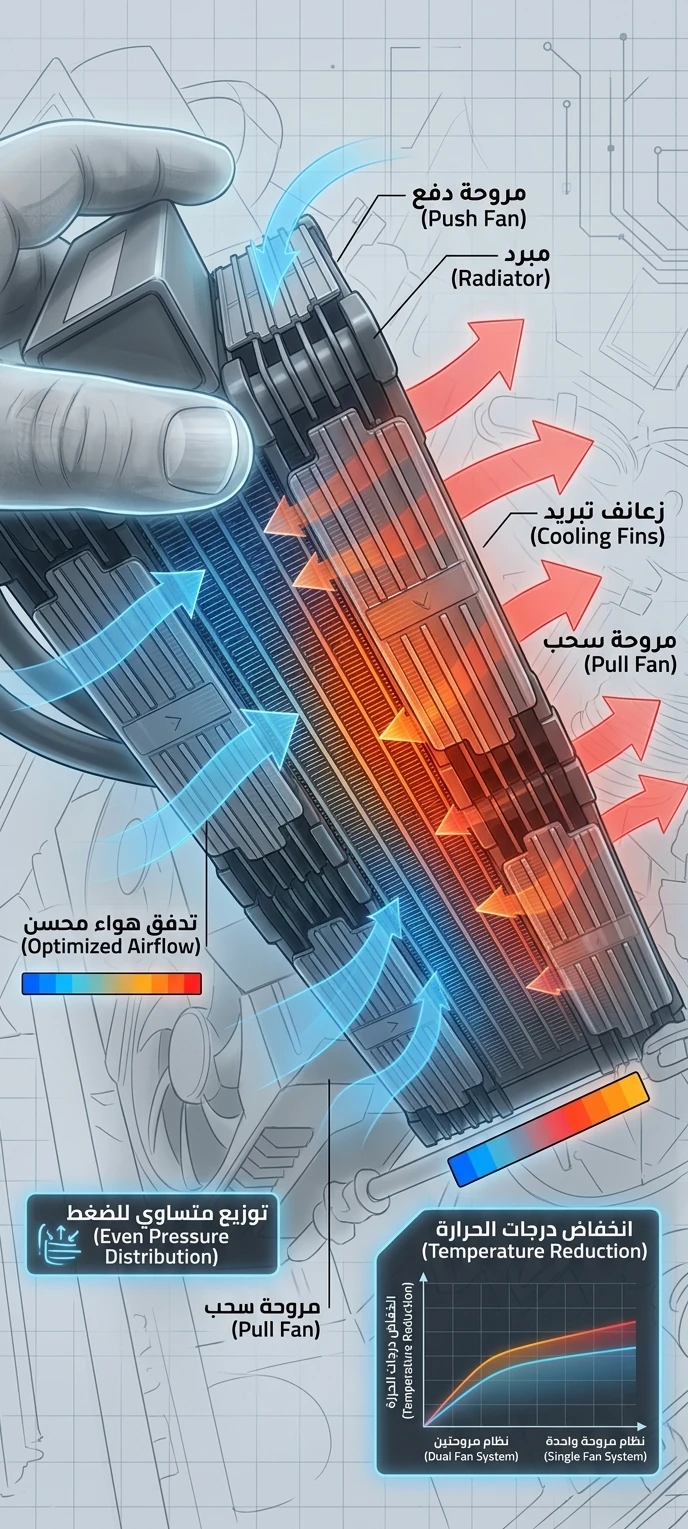
The cooling module has been successfully upgraded with a custom dual-fan (Push/Pull) setup. By perfectly aligning intake pressure with exhaust suction across the radiator fins, this configuration guarantees absolute thermal stability for the AMD Ryzen 9 and RTX 4090 cores even under peak neural loads, maximizing hardware lifespan and operating silently.
- Airflow StrategyDirect Channel Push/Pull
- Thermal StateOptimal Stability
- Acoustics OutputMinimized dB / High Static Pressure
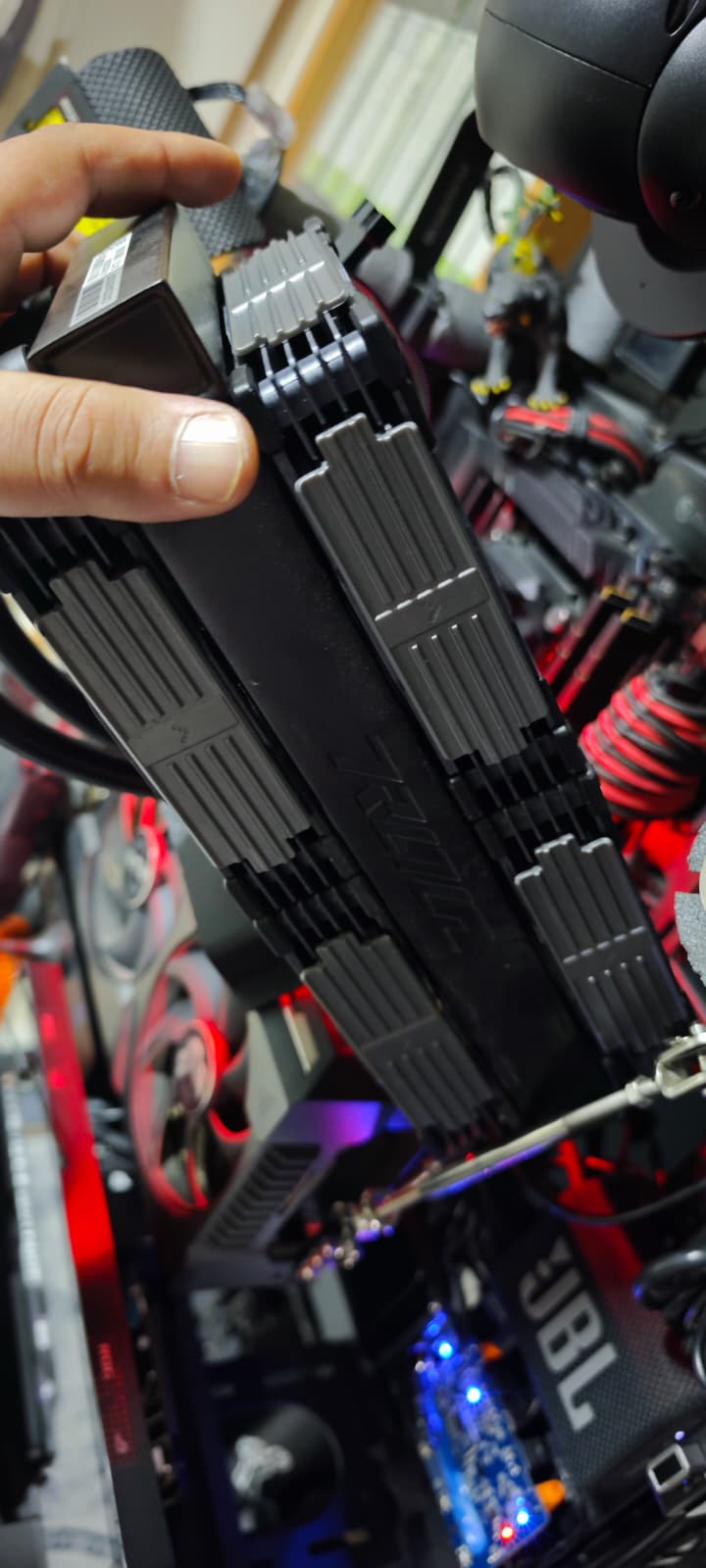
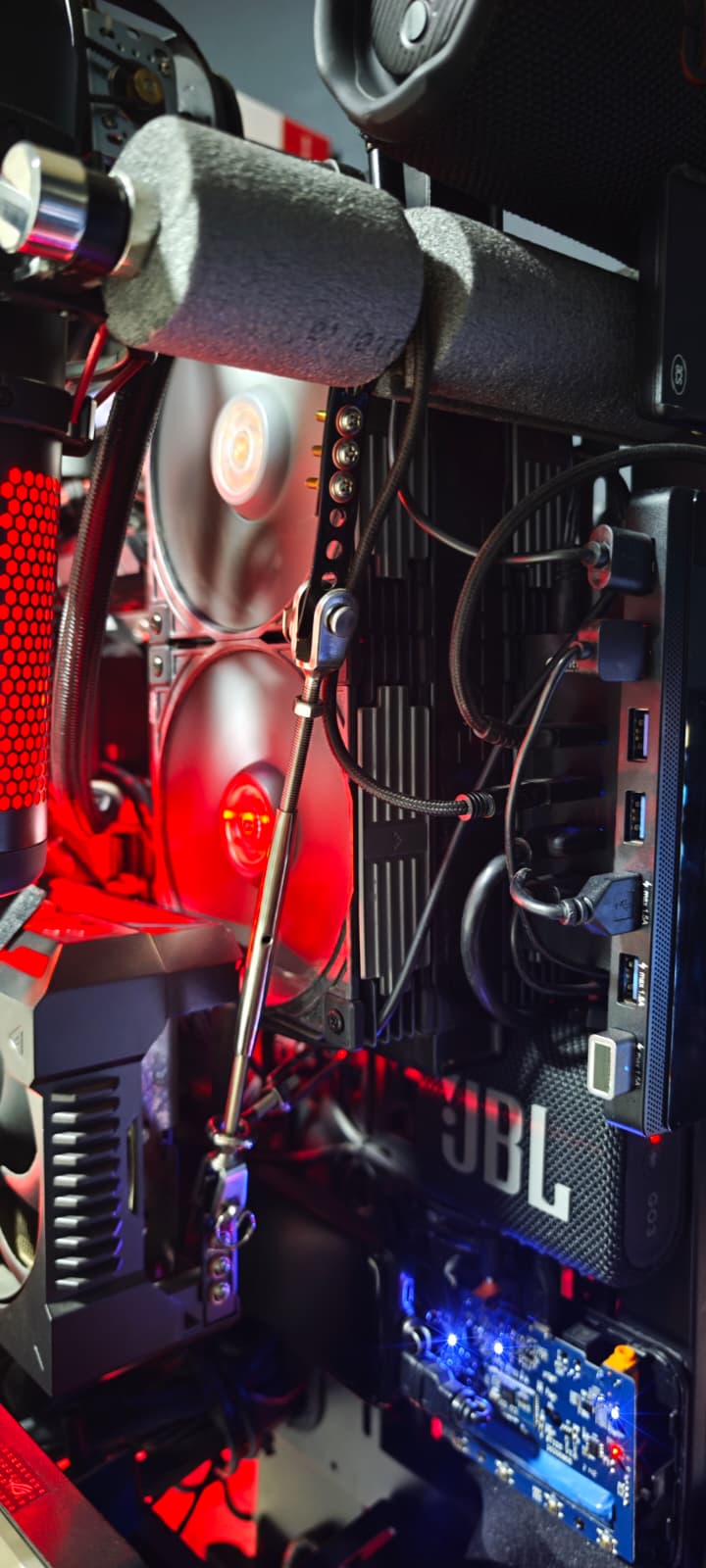
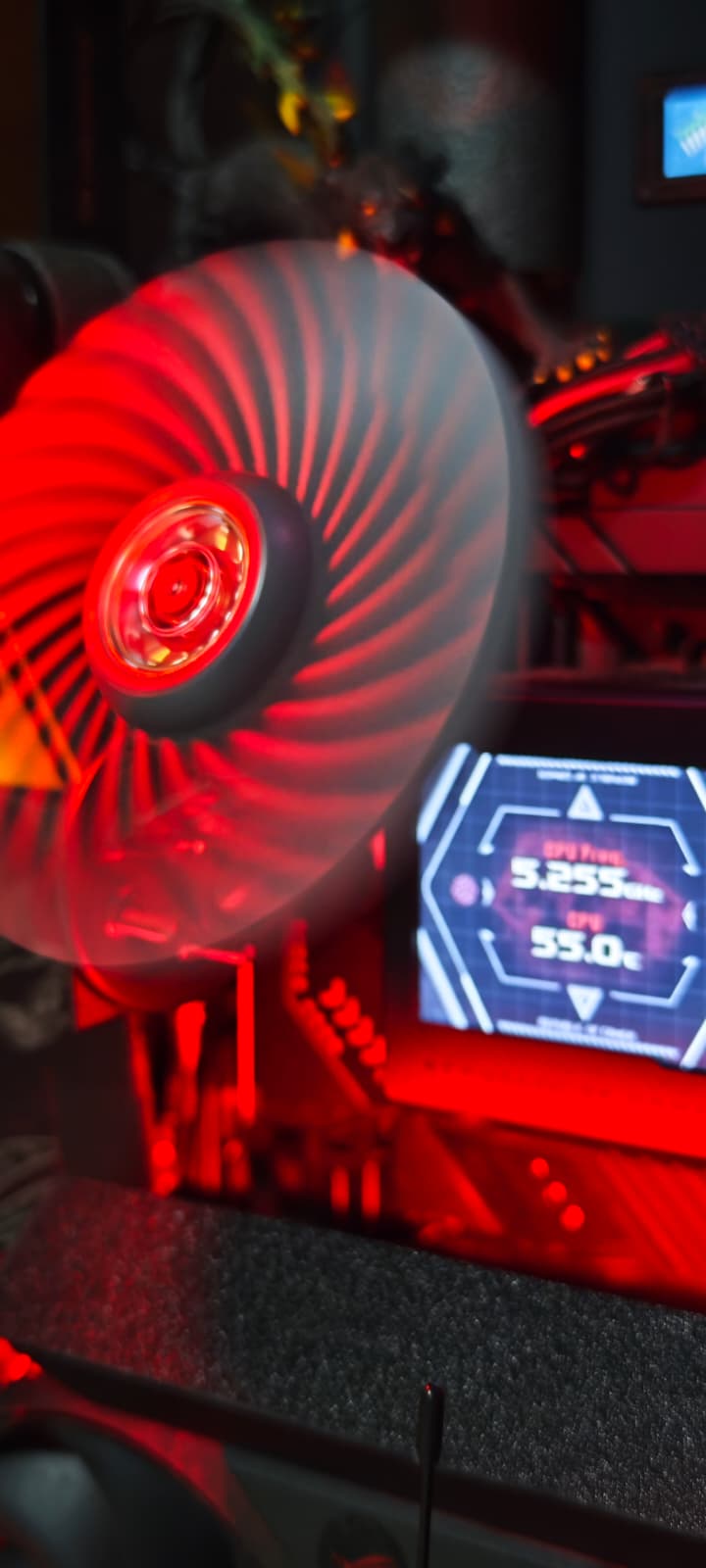
The push fan spinning at full RPM under load, next to the real-time onboard HUD showing live CPU frequency and temperature.
High-End PC Water Cooling: The Push-Pull Radiator Mod
Project design & implementation by AiQbiT — optimizing cooling performance and noise reduction
Project Overview & Hardware
In modern high-performance systems, thermal management is critical. This modding project, designed by AiQbiT, optimizes a high-end water cooling loop through a precise 4-fan configuration in push-pull mode on a 240mm radiator.
Components Used
| Component | Model / Specification |
|---|---|
| Water cooling (AIO) | ASUS ROG Ryujin III 240 ARGB |
| Fan setup | 4× Sudokoo MACH120 PC Fan (120mm) in Push-Pull mode |
| Design & modding | AiQbiT |
The Push-Pull Principle
Standard radiators often work from only one side. With dense fins, the static pressure of a single fan row is rarely enough. By combining two pushing fans (Push) on the front with two pulling fans (Pull) on the back, airflow is forced perfectly through the radiator core.
The advantage: doubling the effective static pressure, eliminating "dead zones," and achieving optimal cooling values with minimal noise.
Results & Conclusion
- Reduced RPMFour fans work harmoniously at partial load for maximum quiet operation (silent mode).
- Stable temperaturesCore temperatures stay in the optimal range even under full load.
- AestheticsAn industrial, high-end look through precise hardware alignment.